5. Creating the Perfect Crust
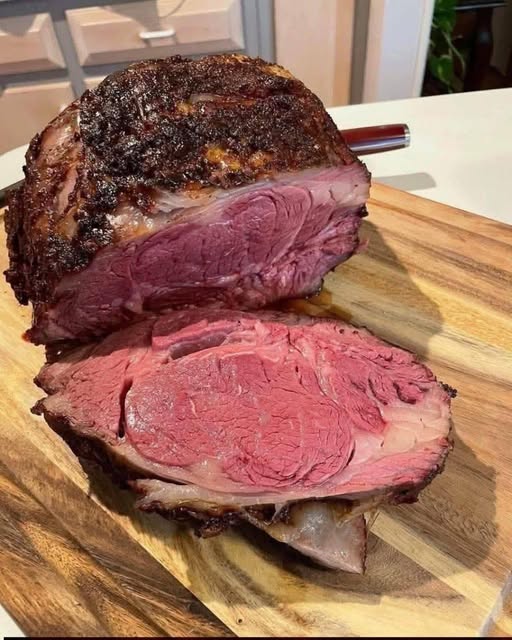
Ensure the roast is completely dry before seasoning.
Apply salt and pepper generously.
Use high heat at the start or finish under the broiler.
Butter or oil can enhance browning.
6. Resting the Roast
Resting is essential:
Tent loosely with foil for 20–30 minutes.
Juices redistribute, preventing them from spilling out during carving.
Internal temperature rises slightly during this time.
7. Carving Prime Rib
Carving is simple with the right tools and technique.
7.1 Tools
Sharp carving knife (or electric knife)
Cutting board with a groove for juices
7.2 Steps
Remove the bones if desired by slicing along the rib line.
Slice into even portions, ½–1 inch thick.
Cut against the grain for maximum tenderness.
Serve immediately with pan juices or au jus.
8. Accompaniments and Sides
Prime rib pairs beautifully with both classic and creative sides.
8.1 Traditional Sides
Yorkshire pudding or dinner rolls
Creamed spinach
Roasted root vegetables
Mashed potatoes or gratin dauphinois
8.2 Sauces
Au Jus: Pan drippings with beef stock and wine
Horseradish Cream: Sour cream, horseradish, lemon juice
Garlic Herb Butter: Butter mixed with garlic, parsley, and thyme
9. Tips for an Unforgettable Prime Rib
Choose quality over quantity.
Season generously.
Monitor internal temperature carefully.
Never skip resting time.
Pair sides and wine thoughtfully.
10. Wine Pairing
Cabernet Sauvignon: Bold and structured; complements rich beef.
Merlot: Smooth and fruity; balances the fat.
Syrah/Shiraz: Peppery notes enhance the seasoning.
Non-alcoholic: Sparkling water with pomegranate or cranberry juice.
11. Storing and Reheating Leftovers
11.1 Storage
Wrap tightly in foil or store in airtight containers.
Refrigerate for 3–4 days or freeze up to 2 months.
11.2 Reheating
Warm in the oven at 250°F (120°C) until heated through.
Avoid microwaving large slices to prevent dryness.
Add au jus or beef broth for moisture.
12. Common Mistakes to Avoid
Skipping the resting period
Under-seasoning
Cooking straight from the refrigerator
Overcooking
Ignoring the thermometer
13. Frequently Asked Questions
Q: Can I cook prime rib on the grill?
Yes. Use indirect heat and monitor the temperature carefully. Finish with a high-heat sear for crust.
Q: How long does a 5-pound roast take?
At 325°F, approximately 15–20 minutes per pound for medium-rare. Always use a thermometer.
Q: Should I cover the roast while cooking?
No. Leave uncovered during roasting for proper browning. Tent only while resting.
Q: How can I enhance the flavor?
Apply a compound butter with garlic, rosemary, and thyme under the fat cap, or dry-brine overnight.
14. Elevating the Experience
Presentation: Serve on a wooden board with bones intact.
Garnish: Fresh herbs, roasted garlic, or edible flowers.
Interactive dining: Carve tableside for dramatic effect.
Conclusion
Cooking a prime rib roast is both an art and a science. With careful selection, proper seasoning, accurate temperature control, and adequate resting time, you can create a centerpiece that is tender, juicy, and deeply flavorful.