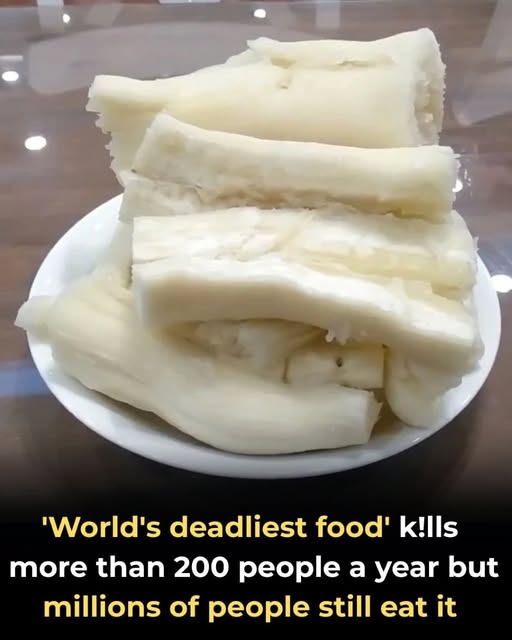
Every year, over 200 people die from consuming what some call the “world’s deadliest food.”
Yet, nearly half a billion people eat it daily—without harm.
That food? Cassava—a humble, starchy root that feeds nations, fuels economies, and sustains life across Africa, Latin America, and Southeast Asia.
So how can something so deadly also be so essential? The answer lies not in the plant itself—but in how it’s prepared.
🌍 What Is Cassava?
Also known as yuca (not to be confused with yucca, the desert plant), cassava is a drought-resistant tuber native to South America. Today, it’s a staple for over 500 million people, especially in regions where rice, wheat, or corn are scarce or unaffordable.
Taste: Mild, slightly nutty, similar to potato
Uses: Boiled, fried, baked, or ground into flour (tapioca)
Nutrition: High in carbs, low in protein, but rich in vitamin C and resistant starch
💡 In Nigeria alone, over 50 million tons of cassava are produced annually—the highest in the world.
☠️ Why Is Cassava Called “Deadly”?
Raw cassava contains cyanogenic glycosides—natural compounds that release hydrogen cyanide when chewed or digested.
There are two types:
Sweet cassava: Low toxin levels—safe with basic cooking
Bitter cassava: High toxin levels—requires extensive processing
If eaten raw or improperly prepared, bitter cassava can cause:
Acute cyanide poisoning (nausea, dizziness, seizures, death)
Konzo: A permanent, paralytic neurological disease causing sudden leg weakness—common in malnourished children and women during famines
📉 The WHO links konzo outbreaks to war, drought, and poverty—when people skip proper preparation to save time or fuel.
✅ How to Make Cassava Safe: Traditional Wisdom Saves Lives
For centuries, communities have used time-tested methods to detoxify cassava:
1. Peeling
Remove the toxic outer skin (where most cyanide concentrates).
2. Soaking
Submerge peeled roots in water for 18–24 hours—allows enzymes to break down toxins.
4. Thorough Cooking
Boil, roast, or bake until completely tender—heat destroys residual cyanide.
🔥 Critical: Never eat cassava raw. Never skip peeling. Never rush the process.
🌱 Why Do Millions Still Rely on Cassava?
Despite the risks, cassava is irreplaceable because it:
Grows in poor soil and drought conditions
Stores well in the ground for months
Provides affordable calories in food-insecure regions
Serves as a lifeline during conflict or climate disasters
🕊️ In many cultures, cassava isn’t just food—it’s resilience on a plate.
🛑 When Danger Strikes: Lessons from History
Venezuela (2016–2019): During economic collapse, families ate under-processed cassava due to fuel shortages—leading to suspected konzo cases.
Democratic Republic of Congo: Repeated konzo epidemics linked to war-displaced populations using bitter cassava without proper tools or time.
These tragedies aren’t about the food—they’re about poverty, lack of education, and systemic vulnerability.
💡 How to Enjoy Cassava Safely (Even Outside Endemic Regions)
If you buy cassava at an international market:
Always choose sweet cassava (smaller, less fibrous)
Peel thoroughly
Soak 12+ hours in cold water
Boil in open pot (to let cyanide gas escape) for at least 20 minutes