Ingredients
2 cups self-rising flour (spooned and leveled)
1½ cups whole buttermilk, well shaken
4 tbsp salted butter, melted
Step-by-Step Instructions
Step 1 — Preheat the Oven
Position a rack in the center of the oven and preheat to 425°F (220°C). A hot oven is critical for good biscuits: the high temperature creates the rapid burst of steam inside the dough that produces the lift and fluffiness in the interior while simultaneously browning and crisping the exterior. Biscuits baked in a too-cool oven spread rather than rise and produce a dense, pale result. Allow the oven to reach full temperature before the dough goes in. Lightly brush a standard baking sheet with a small amount of the melted butter, or line with parchment for easier cleanup.
Step 2 — Combine the Dry Ingredients
Measure the self-rising flour by spooning it lightly into a dry measuring cup and leveling the top — do not scoop the cup directly into the flour bag, which compacts the flour and produces more than the recipe calls for. Add the measured flour to a medium mixing bowl and make a well in the center.
Step 3 — Mix the Dough
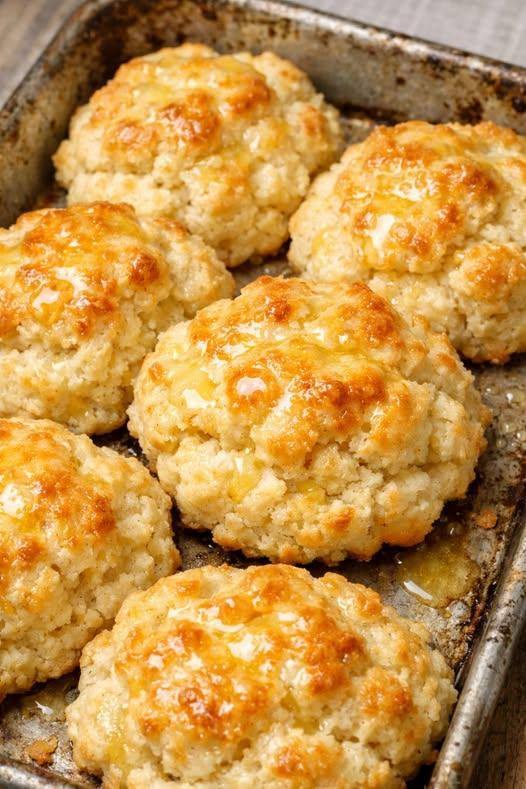
Pour the buttermilk and approximately half the melted butter (about two tablespoons) into the well in the flour. Using a wooden spoon or a rubber spatula, stir just until the dough comes together into a thick, soft, slightly sticky mass. Count the strokes: you want the flour fully incorporated without any dry patches, but no more stirring than necessary. Overmixing develops the gluten in the flour, which produces tough, rubbery biscuits. Stop stirring as soon as the dough is just combined — a few small lumps are completely acceptable and preferable to a smooth, over-worked dough. The texture should be thicker than a muffin batter but wetter than a kneading dough — it should hold its shape when dropped from a spoon but not be dry enough to roll.
Buttermilk does two distinct jobs: it provides the liquid the dough needs to come together, and its acidity reacts with the baking powder in the self-rising flour to produce carbon dioxide — the bubbles that make the biscuits rise and become airy rather than dense. Whole buttermilk (full-fat) produces the best results: its fat content contributes tenderness and a rich, slightly tangy flavor that’s characteristic of good Southern biscuits. The tang of the buttermilk also provides a pleasant flavor contrast to the butter’s richness in the finished biscuit.
The butter serves multiple functions. Some goes into the dough with the buttermilk, contributing fat that produces tenderness; some is brushed over the tops before baking, producing the golden, slightly crisp outer crust; and the final brush of melted butter straight from the oven produces the glistening, rich-smelling finish that makes hot biscuits so irresistible. The melted-butter method rather than cut-in cold butter is what makes drop biscuits fast and foolproof — no cold-butter technique to master, no risk of over-developing the gluten by working the fat in too long.
Why You’ll Love This Recipe
The speed is the most immediate appeal. From bowl to oven to table in under 30 minutes — including the five-minute dough rest and 12 to 15 minutes of baking — these are biscuits that can go from idea to finished plate faster than almost any other from-scratch bread. There’s no dough-chilling time, no waiting for butter to come to the right temperature, no kneading, no rolling. The bowl and spoon method is genuinely accessible to anyone regardless of baking experience, and the results are reliably good from the first attempt.
The flavor is the second appeal. Good drop biscuits made with whole buttermilk and real butter have a tangy, rich, warmly savory character that pairs with an enormous range of foods — savory and sweet alike. They’re equally at home beside scrambled eggs and bacon at breakfast, split and covered with sausage gravy at brunch, served alongside a pot of soup or beans at dinner, or topped with sliced strawberries and whipped cream for a spring shortcake. Few baked goods are as genuinely versatile.
Ingredient Notes
Self-rising flour — two cups, loosely spooned and leveled — is the foundation of the recipe. The key preparation note is how you measure it: spoon the flour lightly into the measuring cup rather than scooping directly from the bag, which compresses the flour and produces significantly more than two cups by weight, leading to dense, dry biscuits. Spoon it in, let it mound slightly above the rim, then sweep the back of a straight edge across the top to level. White Lily is the brand most associated with Southern biscuit baking — it’s made from a softer, lower-protein winter wheat that produces particularly tender, fine-textured biscuits. King Arthur and Gold Medal self-rising flour are also excellent and more widely available nationally. If self-rising flour isn’t available in your area, make your own by whisking together two cups of all-purpose flour with one tablespoon of baking powder and half a teaspoon of fine salt. Measure the all-purpose flour first, then add the leavening and salt — do not substitute baking soda for baking powder, as the proportions and chemical reactions are different.
Whole buttermilk — 1½ cups, well-shaken before measuring — is the liquid component and the key to the biscuits’ tender, slightly tangy character. Whole buttermilk (full-fat) is the correct choice: its fat content contributes tenderness that reduced-fat or fat-free buttermilk cannot provide. Shake the carton vigorously before opening to re-incorporate the settled cream and ensure consistent fat distribution throughout the liquid. If whole buttermilk isn’t available, full-fat cultured buttermilk of any kind works; avoid low-fat buttermilk for this recipe. A reliable substitute for buttermilk is whole milk with a tablespoon of white vinegar or lemon juice added — stir and let it sit for 5 minutes until it curdles slightly, then use in the same quantity. This soured milk substitute works well in a pinch but produces a slightly less complex, less tangy flavor than real cultured buttermilk.
Salted butter — four tablespoons, melted — contributes the fat and the buttery flavor that makes these biscuits taste properly rich. Salted butter is recommended here because the salt in the butter adds a pleasant complexity to the biscuit’s flavor that works well with the buttermilk’s tang and the self-rising flour’s leavening. The butter is added partially to the dough (about half) and partially used for brushing before and after baking. Dividing the butter this way — some into the dough for tenderness, some brushed on the surface for the golden crust, some brushed on after baking for the glossy, fragrant finish — maximizes the butter’s impact on both texture and flavor. European-style butter with its higher fat content produces a noticeably richer biscuit if you want to upgrade the recipe.