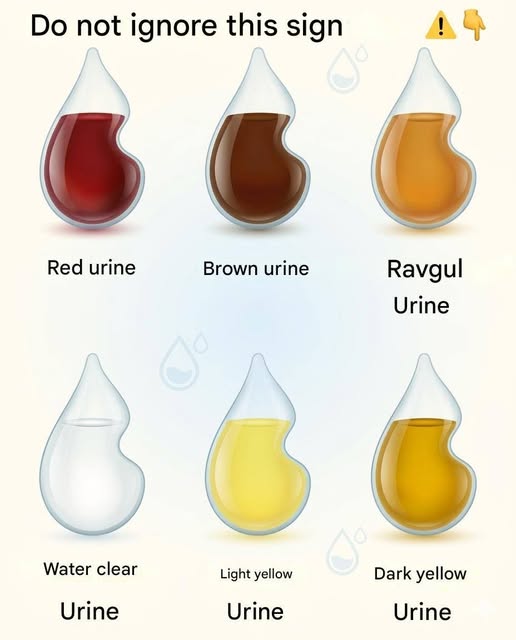
Orange color can be caused by dehydration, but sometimes also by certain foods or medications. In some cases, it can be associated with liver or bile problems.
👉 Important: If the color persists, you should consider seeing a doctor.
Brown urine
Brown urine can be a sign of more serious problems, such as liver damage or severe dehydration. It can also occur after intense physical activity.
👉 Recommendation: See a doctor if you experience this.
Red urine
Red or pink urine can be caused by certain foods such as beets, but it can also be a sign of blood in the urine, which requires attention.
👉 Warning: See a doctor if you are unsure or if it does not go away.
When should you be concerned?
It is important to understand that temporary changes in the color of your urine are often harmless. However, if an unusual color persists for several days or is accompanied by other symptoms such as pain or fatigue, you should seek medical attention.
Conclusion
Your body communicates with you in many ways – and the color of your urine is one of the clearest signals. By paying attention to these changes, you can better take care of your health and prevent problems in time.
Checking the color only takes a few seconds, but it can provide valuable information about how your body is feeling.