

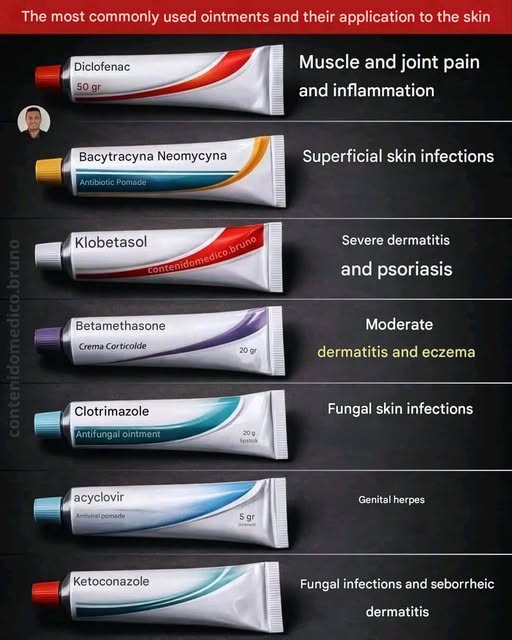
Ointments are semi-solid preparations composed primarily of fats or oils, designed to remain on the skin and be slowly absorbed.
Here are the most common and their proper uses:
1. Antibiotics (triple antibiotic)
Contain neomycin, polymyxin B, and bacitracin.
When to use: Only on wounds with signs of active infection (pus, fever, excessive redness).
Common mistake: Applying them “just in case” to clean wounds promotes bacterial resistance. For common abrasions, MSD Manuals Vaseline is equally effective and less allergenic.
2. Healing and regeneration
They typically contain dexpanthenol (vitamin B5) or extracts such as Centella asiatica.
When to use: On very dry skin, cracks, minor burns, or to accelerate the healing of an existing scab.
Recent Articles




Pages: 1 2
