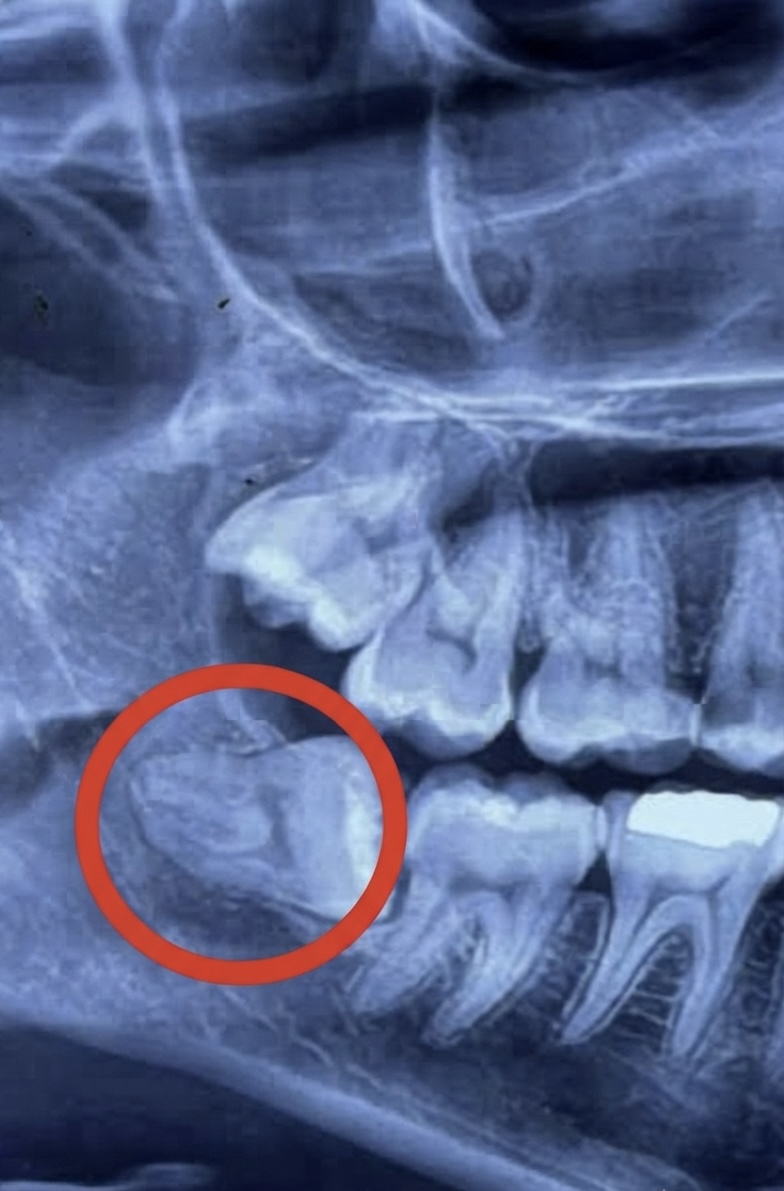
The dental community often calls wisdom teeth the "rebel teeth." They are the last to emerge, and in many cases, they simply don’t have enough space to grow properly, leaving them trapped beneath the gums or deep within the jawbone. This condition is medically known as an "Impacted Wisdom Tooth," and it is more than just an inconvenience—it can be a ticking time bomb for your oral health.
Why do wisdom teeth become impacted?
Human jaws have evolved to be smaller over the centuries, but wisdom teeth remain part of our genetic blueprint. When they start to emerge (usually between ages 17 and 25), they often find no room, forcing them to grow at awkward angles, push against neighboring teeth, or remain completely buried.
Why are impacted wisdom teeth dangerous?
You might live for years without feeling any pain, but "no pain" does not mean "no damage." The risks include:
1. Chronic Gum Infections (Pericoronitis): A partially impacted tooth creates a flap of gum tissue that acts as a trap for food and bacteria. This is impossible to clean thoroughly, leading to painful infections, swelling, and sometimes abscesses.
2. Decay of Healthy Neighbors: The impacted tooth often pushes against your second molar. This mechanical pressure and the inability to floss between them make the healthy tooth highly susceptible to severe decay, which can eventually lead to losing both teeth.
3. Cysts and Tumors: Wisdom teeth develop inside a small sac in the jawbone. If the tooth doesn't emerge, this sac can remain and potentially grow into a cyst or a benign tumor. These can slowly dissolve the jawbone and weaken its structure without showing any obvious symptoms until it's too late.
4. Dental Crowding: As the impacted tooth tries to push its way out, it exerts constant pressure on the rest of your teeth. This can cause shifting and "crowding," ruining the alignment of your smile—even if you’ve already had orthodontic treatment.
How to spot the warning signs?
Symptoms often only appear when inflammation flares up. Watch for:
Persistent pain in the back of your jaw that may radiate to your ear or neck.
Swollen, red, or tender gums behind your last molar.
Persistent bad breath or a strange, metallic taste in your mouth.
Difficulty opening your mouth fully or trouble swallowing.
Swollen lymph nodes in the neck.
The Verdict: Is extraction necessary?
Not every impacted wisdom tooth needs to be removed immediately. However, if it is causing pain, infection, decay, or shifting your other teeth, surgical extraction is essential.
A simple panoramic X-ray or CT scan is all it takes for your dentist to determine the position of the tooth and its relationship to the main jaw nerves, ensuring a safe removal process.
Don't wait for a sudden, excruciating flare-up. If you are in your 20s and haven't had a dental check-up for your wisdom teeth, book an appointment today. Prevention is always cheaper, faster, and less painful than emergency surgery!